As the world moves toward renewable and resilient energy systems, one fact remains constant: no matter how advanced generation technology becomes, it still relies on strong, durable infrastructure to move power where it’s needed.
That infrastructure starts with poles — and whether made of wood or steel, they remain the backbone of the modern grid.
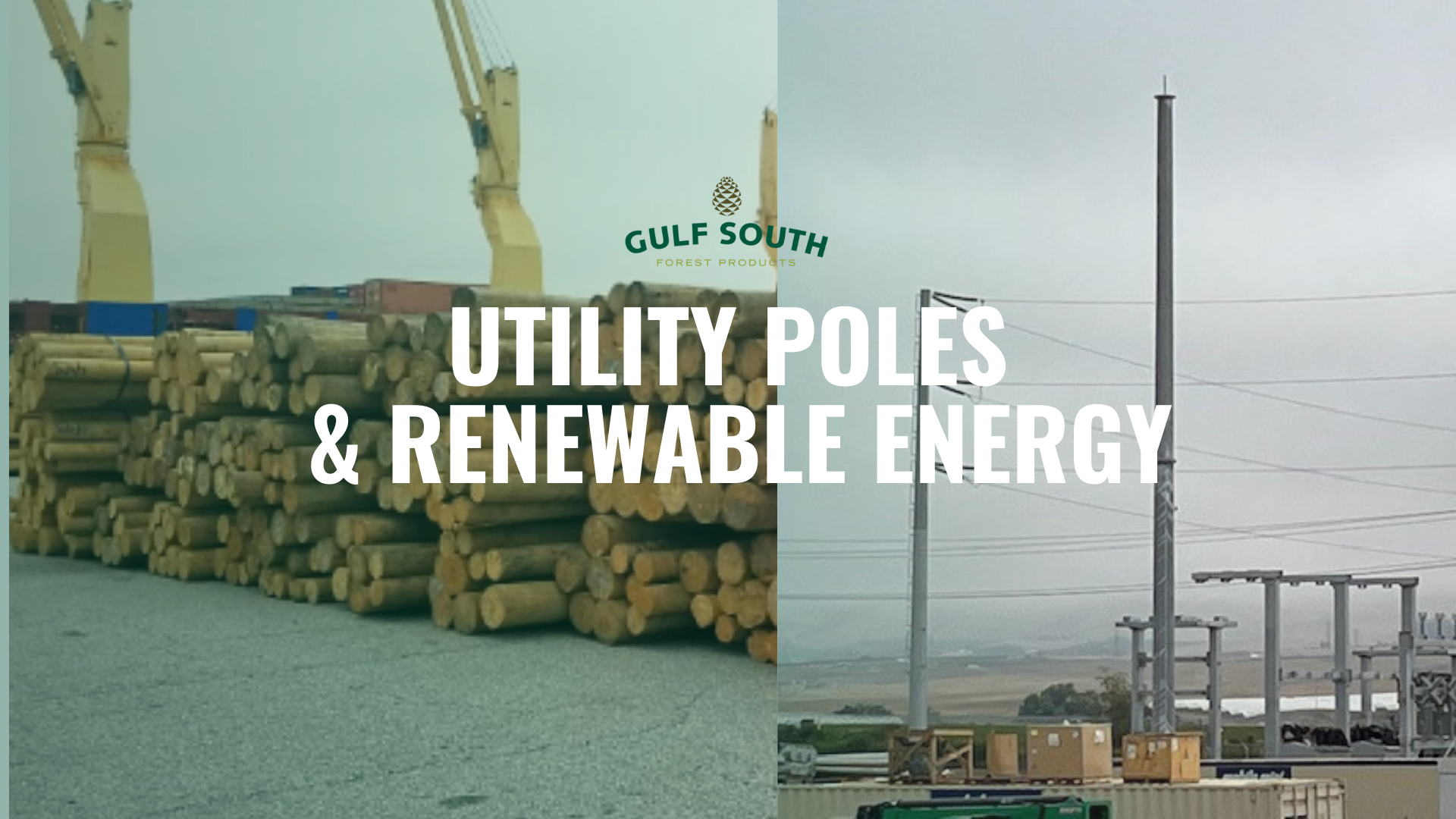
At Gulf South Forest Products and our dedicated division, Gulf South Pole, we supply both wood and steel utility poles designed for the evolving needs of high-voltage, renewable, and resilient energy networks.
Why the Grid Needs Bigger, Stronger Poles
As utilities upgrade to higher KV transmission lines to handle increased loads from renewable energy and population growth, they require taller and stronger poles capable of carrying more weight across longer spans.
Properly treated Southern Yellow Pine has long met these demands — and continues to do so with proven performance in the field:
- Flexibility and resilience: Treated wood poles bend with wind instead of breaking, often outperforming rigid materials during hurricanes and windstorms.
- Lightweight design: Wood poles are easier to transport and install in rural or mountainous areas, where cranes or heavy concrete poles can’t easily reach.
- Ease of access: Lineworkers can climb wooden poles without built-in steps or rungs, reducing installation time and equipment requirements.
- Sustainability: Wood stores carbon and requires less energy to produce than steel or concrete, aligning with the renewable-energy mission.
The Role of Fire Mitigation in Material Selection
In regions like California and Washington, utilities are increasingly turning to steel poles as part of their wildfire mitigation strategies.
As hotter, drier conditions and prolonged fire seasons continue across the West, steel poles offer a non-combustible solution in high-risk zones where wood’s natural advantages must yield to fire safety requirements.
At Gulf South Pole, we recognize that no single material fits every scenario. Our role is to help utilities make informed decisions based on environmental risk, performance needs, and total life-cycle cost — whether that means using wood in renewable-rich rural areas or steel in fire-prone transmission corridors.
The energy transition isn’t about choosing between materials — it’s about using each where it performs best.
Where Timber and Steel Work Together
Wood and steel aren’t competitors — they’re complementary.
At Gulf South Pole, we offer both, ensuring that every project has the right solution for its conditions and goals.
- Wood poles provide cost efficiency, resilience, and ease of installation for distribution networks and renewable interconnections.
- Steel poles deliver fire resistance, uniformity, and extreme load capacity for high-voltage transmission and wildfire-prone areas.
This balanced approach gives utilities flexibility, performance, and peace of mind — no matter the terrain or weather conditions.
How Timber Supports Renewable Energy Infrastructure
From solar and wind farms to battery storage facilities, renewable projects rely heavily on wooden products for infrastructure and access:
- Access mats and roadways: Southern Yellow Pine mats protect fragile ground during heavy equipment movement.
- Distribution networks: Wooden poles connect remote renewable sites to the grid efficiently and sustainably.
- Coastal and offshore applications: Marine-treated timber supports docks, platforms, and cable routes for offshore wind projects.
Timber doesn’t compete with renewables — it enables them.
The Carbon and Cost Advantage
Every cubic meter of wood used instead of steel prevents roughly two tons of CO₂ emissions, according to the Forest Products Laboratory.
That makes wood poles not just a practical choice, but a climate-smart one.
And with Southern forests growing 30% more wood than is harvested annually, wood supply remains abundant and renewable — providing an eco-efficient complement to steel infrastructure.
Life Cycle Assessment Study Shows Replacing Wood Utility Poles with Steel Significantly Lowers Key Environmental Impacts
Recycling Process: Steel is a “permanent resource”. In the U.S. alone, 60 to 80 million tons of steel scrap are recycled annually. Used steel utility poles are typically sent to a metal recycler, where the material is melted down and turned into new steel products, such as new beams, car doors, or other construction materials. This process is highly efficient and minimises landfill waste.
Utility Programs: Several utility companies have robust programs for managing and recycling retired utility poles (both wood and steel).
Oncor reported recycling over 31 million pounds of scrap metal in a single year, highlighting the scale of utility recycling efforts.
Ameren and Mon Power partner with companies like Blackwood Solutions to ensure old poles are either repurposed or properly recycled, demonstrating an industry-wide commitment to reducing environmental impact.
Environmental Impact: A major benefit of steel is the reduction in hazardous waste. Treated wood poles, which often contain chemicals like chromated copper arsenate (CCA), present disposal challenges and can pose health risks if not managed properly. Steel production results in negligible untreated waste at the disposal stage because almost all material is recycled.
For more information, resources are available from industry groups such as the World Steel Association and the American Iron and Steel Institute
Gulf South Pole: Delivering Strength, Reliability & Choice
Our Gulf South Pole division brings together the best of both worlds — wood and steel — ensuring that utilities and contractors have the right materials for every project.
We provide:
- Wood poles: SPIB-graded, AWPA-treated, and field-proven for decades of reliable use.
- Steel poles: Engineered for strength, consistency, and fire resistance in critical infrastructure zones.
- Advisory support: Helping clients select the ideal pole type for load, terrain, and environmental risk.
Whether you’re building new renewable corridors or hardening existing lines against storms and fire, Gulf South Pole delivers solutions designed for performance and longevity.
Looking Ahead
As renewable energy continues to expand, hybrid infrastructure will define the future — combining wood, steel, and engineered materials for greater resilience.
At Gulf South Forest Products and Gulf South Pole, we’re proud to power that evolution — supporting stronger grids, safer communities, and a cleaner energy future.
Resources
- Forest Products Laboratory (USDA) – “Wood Products and Carbon Storage in Modern Infrastructure”
fs.usda.gov - Life Cycle Assessment Study Shows Replacing Wood Utility Poles with Steel Significantly Lowers Key Environmental Impacts – https://steelpowerpoles.com/library/research/life-cycle-assessment-study
- American Wood Council – “Wood and Steel Utility Poles: Engineering Data and Fire Mitigation Performance”
awc.org - Steel Utility Pole Coalition (SUPC) – https://steelpowerpoles.com/
- National Renewable Energy Laboratory (NREL) – “Materials Innovation in Renewable Energy Infrastructure”
nrel.gov - California Public Utilities Commission (CPUC) – “Utility Wildfire Mitigation Plans and Infrastructure Upgrades”
cpuc.ca.gov - Utility Products Magazine – “Comparing Wood and Steel Poles in Renewable Energy & Wildfire Zones”
utilityproducts.com