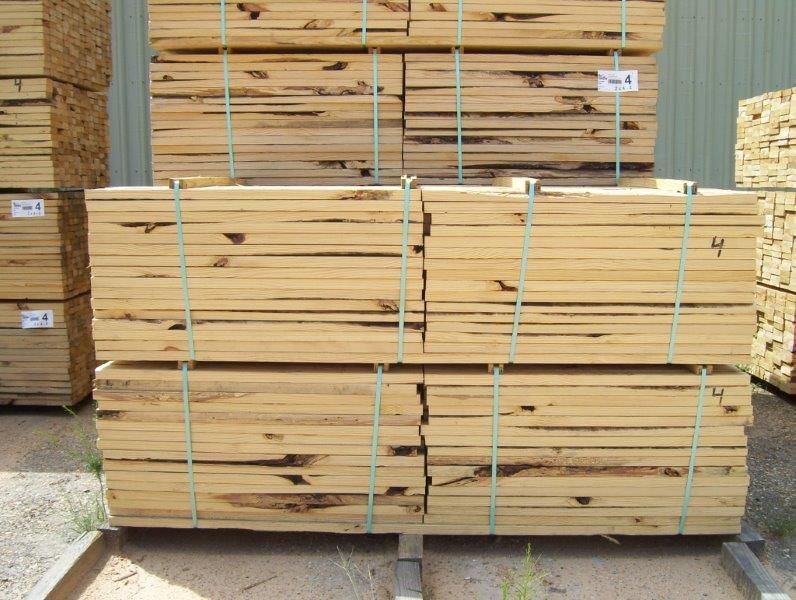
Kiln-dried (KD) lumber ships from Gulf South Forest Products at 6–8% moisture content for American hardwood species and a maximum 19% for Southern Yellow Pine, satisfying phytosanitary entry requirements and minimizing transit moisture risk in ocean containers.
Air-dried (AD) lumber ships at higher moisture content, costs less per unit, and suits buyers in markets where KD certification is not a building code or manufacturing requirement.
Request a quote and specify KD or AD, along with your species, grade, and destination port, to receive current pricing and lead time.
Key Takeaways
- Kiln-dried (KD) lumber is lumber dried in a temperature- and humidity-controlled chamber to a target moisture content of 6–8% for American hardwood species and a maximum 19% for Southern Yellow Pine under SPIB export grading rules.
- Air-dried (AD) lumber is lumber dried through natural air circulation without controlled kiln heat, reaching equilibrium moisture content over 8–16 months and shipping at 12–18% moisture content — higher than KD hardwood.
- Container rain — condensation that forms on ocean container walls and ceiling during transit, then drips onto cargo — poses a direct risk of mold, surface staining, and dimensional movement to lumber shipped at moisture content above 19%.
- ISPM 15 heat treatment and kiln drying are two distinct processes: kiln drying reduces the moisture content of commodity lumber; ISPM 15 heat treatment renders wood packaging material pest-free and governs pallets and dunnage, not commodity lumber boards.
What Is Kiln-Dried Lumber and Why Does It Matter for Container Export?
Kiln-dried (KD) lumber is lumber dried in a temperature- and humidity-controlled kiln chamber until the wood reaches a specified target moisture content. Gulf South Forest Products ships American hardwood — including White Oak, Red Oak, Hard Maple, Black Walnut, Cherry, and Tulip Poplar — kiln dried to 6–8% moisture content.
Gulf South Forest Products ships Southern Yellow Pine (SYP) kiln-dried to a maximum moisture content of 19%, averaging approximately 15% within a shipment, under SPIB export grading rules.
Kiln drying sets the cell walls of the wood through controlled heat — a structural change that causes KD lumber to absorb and release ambient moisture more slowly than AD lumber once removed from the kiln.
USDA Forest Products Laboratory Wood Handbook data confirms that cell wall stabilization through kiln drying reduces the rate of dimensional movement — warping, cupping, and twisting — when lumber encounters humidity changes during ocean transit or after delivery to the destination manufacturing facility.
Why International Buyers Specify KD
Furniture manufacturers in Vietnam, Germany, Italy, and Japan specify KD hardwood at 6–8% moisture content because precision production equipment — CNC routers, panel saws, edge banders, and UV finishing lines — requires dimensional stability in every board entering the production line.
A board that warps or cups between container unloading and production entry causes equipment alignment failures, rejected cuts, and finish adhesion failures — so specifying KD eliminates the acclimation period that AD lumber requires before entering precision manufacturing.
KD Moisture Content — North American vs. European Standards
International buyers must distinguish between North American and European KD moisture content standards when sourcing hardwood lumber.
North American KD hardwood targets 6–8% moisture content, as defined in the USDA Forest Products Laboratory Wood Handbook — the authoritative technical reference for wood moisture and drying specifications published by the U.S. Department of Agriculture.
European KD standards commonly target 12–15% moisture content, reflecting the higher equilibrium moisture content of Europe’s more humid interior environments, according to NHLA’s international grading guidance and cross-referenced in AHEC’s export buyer publications.
A regional moisture content difference of 4–7 percentage points causes measurable dimensional movement when European-standard KD lumber enters the drier interior environments of North American construction projects or climate-controlled furniture factories.
Gulf South Forest Products dries all export hardwood to North American KD standards — 6–8% moisture content — and provides mill-issued kiln certificates confirming the drying schedule and final moisture readings on every container.
What Is Air-Dried Lumber and When Is It Appropriate for Export?
Air-dried (AD) lumber is lumber dried through natural air circulation — stacked with spacer sticks (stickers) between boards to promote airflow — without controlled kiln heat.
Air-drying American hardwood to equilibrium moisture content takes 8–16 months or longer, depending on species, board thickness, and local climate, according to USDA Forest Products Laboratory drying-time data.
AD hardwood typically reaches a moisture content of 12–18% in the humid southeastern United States, where Gulf South Forest Products sources its material.
AD lumber ships at a lower per-unit cost than KD lumber because air drying requires no kiln energy input, no drying schedule management, and less processing time per board foot.
Buyers who operate their own kiln facilities at the destination — and prefer to dry incoming lumber to their own in-country specifications after delivery — specify AD to reduce material acquisition cost and control final moisture content through their own drying infrastructure.
Shipping Dry Lumber — A Third Export Drying Category
Shipping dry lumber is a third drying category in which hardwood is air dried to approximately 18–25% moisture content — lower than green lumber (typically 50–100% moisture content) but higher than standard KD.
Shipping dry lumber reduces shipping weight relative to fully green material and provides greater dimensional stability during transit than green lumber, while costing less per unit than KD.
Shipping dry is not a subcategory of AD — shipping dry, AD, and KD represent three distinct moisture specifications, each requiring explicit confirmation in the purchase order.
Buyers who specify shipping dry lumber must confirm that the destination country’s customs authority and national plant protection organization (NPPO) accept the moisture content level for the imported commodity species before placing the order.
How Does Moisture Content Affect Lumber During Ocean Freight?
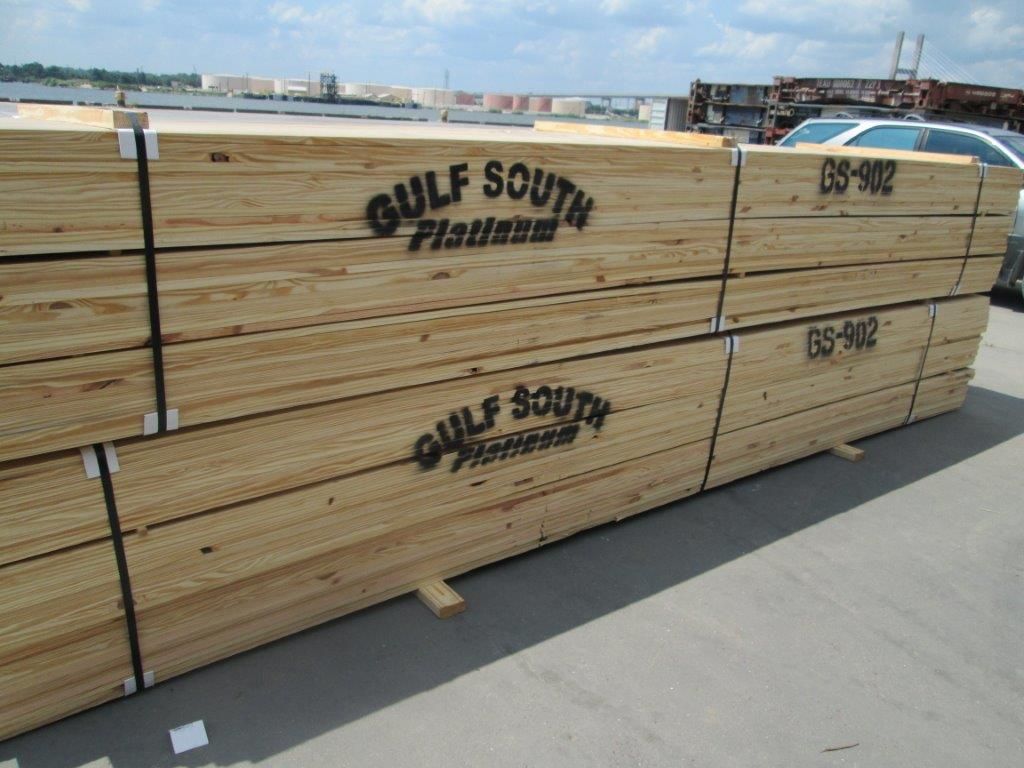
Ocean container transit exposes lumber to temperature and humidity cycles that directly affect lumber moisture content and dimensional stability. A container shipped from the Port of Mobile, Alabama, through the Gulf of Mexico, across the Atlantic or Pacific, and into a destination port in Europe or Asia passes through multiple climate zones — from subtropical heat and humidity to cold northern ocean conditions — in a single 15–35-day voyage.
Container Rain — The Moisture Risk Specific to Lumber Exporters
Container rain is a transit phenomenon in which condensation forms on the interior metal walls and ceiling of an ocean shipping container, then drips onto the cargo below.
Container rain occurs when warm, moisture-laden air inside the container cools to its dew point as the container passes through colder climate zones, causing water vapor to condense into liquid droplets on cooler metal surfaces.
A single container shipped from the subtropical Port of Mobile, with loading conditions to cold northern European or Asian destination ports, can repeatedly cycle through this condensation process during a 15–35-day voyage, according to research from Virginia Tech’s Center for Packaging and Unit Load Design.
Lumber loaded at high moisture content contributes directly to container rain risk — wood releases moisture vapor into the sealed container air as temperatures drop, raising the relative humidity inside the container and accelerating condensation on container walls and ceiling.
Kiln-dried hardwood at 6–8% moisture content releases substantially less moisture vapor during transit than AD hardwood at 15–18%, reducing container rain risk and protecting lumber surfaces from the mold growth, surface stain, and dimensional movement that marine cargo insurance policies typically classify as an excluded “known risk” rather than a covered peril.
| Moisture Content Level | Transit Risk | Mold Risk | Dimensional Stability | Typical Export Application |
| 6–8% (KD hardwood, North American standard) | Low | Low | High | Precision furniture manufacturing, hardwood flooring, architectural millwork |
| 12–15% (European KD standard) | Moderate | Moderate | Medium | General furniture production, joinery, and light construction |
| 19% max (KD softwood / Southern Yellow Pine) | Moderate | Low–Moderate | Medium | Construction framing, infrastructure, pallet stock |
| 18–25% (Shipping dry) | Moderate–High | Moderate | Lower | Buyers with in-country kilns, industrial processing applications |
| 25%+ (AD / green lumber) | High | High | Low | Buyers with their own kiln facilities only; not recommended for container export |
ISPM 15 Compliance: Does Drying Method Affect Phytosanitary Requirements?
ISPM 15 — the International Standards for Phytosanitary Measures No. 15, published by the International Plant Protection Convention (IPPC) of the Food and Agriculture Organization of the United Nations (FAO) — governs wood packaging material (WPM): pallets, dunnage, crating, and blocking used to secure cargo inside shipping containers.
ISPM 15 requires WPM to be debarked and heat-treated to a minimum wood core temperature of 56°C for at least 30 continuous minutes, or fumigated with methyl bromide, before an American Lumber Standard Committee (ALSC)-accredited agency applies the IPPC compliance stamp.
Kiln Drying and ISPM 15 Heat Treatment Are Two Separate Processes
Kiln drying lumber to 6–8% moisture content is not equivalent to ISPM 15 heat treatment, and a pallet built from kiln-dried lumber is not automatically ISPM 15-compliant.
Kiln drying targets moisture reduction in commodity lumber boards. ISPM 15 heat treatment targets the elimination of phytosanitary pests in wood packaging material by holding the material at a specific core temperature for a minimum duration.
A pallet must be independently heat-treated to ISPM 15 specifications and stamped by an ALSC-accredited agency, regardless of whether the pallet lumber was originally kiln dried — a distinction confirmed by Virginia Tech’s Center for Packaging and Unit Load Design.

Gulf South Forest Products confirms ISPM 15-compliant WPM on every export container. KD and AD commodity lumber boards — American hardwood and Southern Yellow Pine — do not require ISPM 15 heat treatment applied to the boards themselves.
Buyers importing lumber into the EU, Australia, Japan, and other markets with active biosecurity frameworks must confirm the phytosanitary entry requirements for commodity lumber with their customs broker or NPPO before placing an order.
KD vs. AD Lumber: Side-by-Side Comparison for Export Buyers
Gulf South Forest Products supplies KD American hardwood, KD Southern Yellow Pine, and AD hardwood for container export. KD, shipping dry, and AD represent three distinct moisture categories—not two—, and buyers must specify which category applies to their order so Gulf South can accurately confirm availability, lead time, and per-board-foot pricing.
Contact Gulf South Forest Products to confirm current KD availability by species and lead time before specifying drying method in your purchase order.
| Specification | Kiln Dried (KD) | Shipping Dry | Air Dried (AD) |
| Drying method | Temperature- and humidity-controlled kiln chamber | Natural air circulation to partial equilibrium moisture | Natural air circulation with sticker-spaced board stacking to full equilibrium |
| Moisture content — hardwood | 6–8% (North American standard) | 18–25% | 12–18% typical at export |
| Moisture content — SYP | Maximum 19%, averaging 15% per shipment | 18–25% | 25%+ (green or partially dried) |
| Drying time | Days to weeks in the kiln | 3–6 months, depending on species and thickness | 8–16+ months depending on species and board thickness |
| Per-unit cost | Higher — kiln energy, schedule management, and certification included | Medium — no kiln cost; partial drying time only | Lower — no kiln processing or certification cost |
| Container rain risk | Low | Moderate–High | High |
| Dimensional stability in transit | High — cell walls set by kiln heat | Lower — cell walls not heat-set | Low — cell walls not heat-set |
| Production-ready on delivery | Yes — enters precision manufacturing immediately | No — requires in-country drying or acclimation | No — requires acclimation or in-country re-drying |
| Mill certificate available | Yes — kiln schedule and MC readings documented | No standard moisture certificate | No standard moisture certificate |
| ISPM 15 application | Not applicable to commodity lumber boards | Not applicable to commodity lumber boards | Not applicable to commodity lumber boards |
| Best suited for | Furniture manufacturing, flooring, precision millwork, and building code compliance markets | Buyers with their own kiln facilities who want reduced shipping weight vs. green lumber | Buyers with their own kiln facilities only; markets without KD moisture code requirements |
Gulf South Forest Products ships KD and AD American hardwood and Southern Yellow Pine from the Port of Mobile, Alabama, to any destination port worldwide. Get a quote today and receive a response from the Gulf South export team within one business day.
Frequently Asked Questions
What moisture content is required for kiln-dried hardwood export?
Gulf South Forest Products ships American hardwood kiln-dried to 6–8% moisture content — the North American KD standard defined by the USDA Forest Products Laboratory — to most international export destinations. Mill-issued kiln certificates confirming the drying schedule and final moisture readings are available upon request for every KD hardwood container. European KD standards target a moisture content of 12–15%, a regional difference that buyers must confirm when sourcing hardwood from non-U.S. suppliers.
Does air-dried lumber meet ISPM 15 requirements for export?
ISPM 15 governs wood packaging material — pallets, dunnage, and crating — not commodity lumber boards. Neither KD nor AD commodity lumber requires ISPM 15 heat treatment on the boards themselves. The wood packaging used to secure lumber in the container must bear ISPM 15-compliant stamps for destination countries that require them, per USDA APHIS guidelines, regardless of whether the lumber cargo is KD or AD.
Why do most container export orders specify kiln-dried lumber?
KD lumber at 6–8% moisture content enters precision manufacturing equipment immediately without acclimation, resists mold and dimensional movement during 15–35-day ocean transit, and satisfies building code moisture requirements in most destination markets.
What happens if the moisture content is too high in a shipping container?
Lumber shipped at high moisture content releases water vapor into the air of a sealed container during transit. As container temperature drops while crossing climate zones, the vapor condenses on the metal container walls and ceiling — a phenomenon known as container rain — and drips onto the lumber below, causing mold growth, surface staining, and warping.
Is there a price difference between KD and AD lumber for export orders?
KD lumber commands a higher per-board-foot price than AD lumber because kiln drying requires energy input, kiln equipment, drying schedule management, and moisture certification — costs that air drying does not incur. The price premium varies by species, board thickness, and current market conditions.