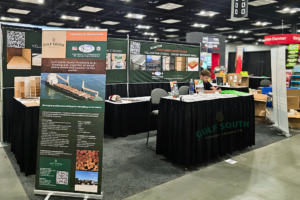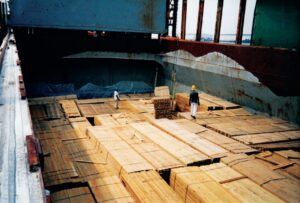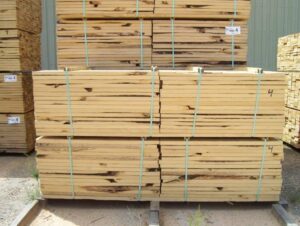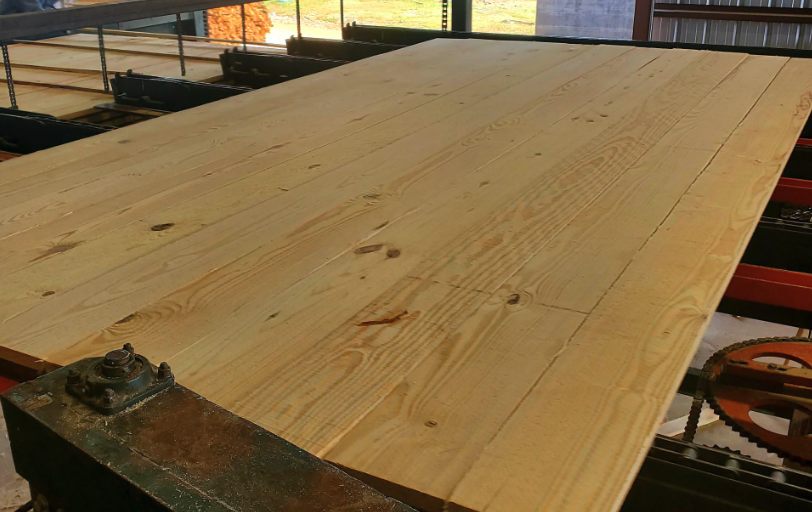
Gulf South Forest Products supplies American hardwood lumber to wholesale importers and furniture manufacturers in more than 50 countries. Red Oak, White Oak, Hard Maple, and Black Walnut ship from the Port of Mobile, Alabama, in FAS, 1 Common, and 2 Common grades, graded under National Hardwood Lumber Association (NHLA) rules.
Request a quote to confirm species availability, grade, and lead time for your next container order.
Key Takeaways
- The National Hardwood Lumber Association (NHLA), headquartered in Memphis, Tennessee, publishes the grading rules that govern every American hardwood export order worldwide.
- FAS (Firsts and Seconds) grade requires 83.3% clear face on the better board face and ranks as the most specified export grade among international furniture manufacturers in China, Vietnam, Germany, and Italy.
- American hardwood lumber ships are ISPM 15-compliant when kiln-dried to 6–8% moisture content, satisfying phytosanitary entry requirements in most destination countries.
- Gulf South Forest Products ships from the Port of Mobile, Alabama, to buyers in more than 50 countries and provides phytosanitary certificates, fumigation certificates, and customs-formatted commercial invoices on every order.
What American Hardwood Species Are Available for Export?
American hardwoods are broad-leaved deciduous trees harvested from sustainably managed forests across the eastern United States. Gulf South Forest Products sources and exports seven primary hardwood species to international wholesale importers and furniture manufacturers.
American White Oak (Quercus alba) is a ring-porous hardwood native to the eastern United States, defined by closed tyloses in its pores that make White Oak naturally water-resistant. White Oak carries a Janka hardness rating of 1,360 lbf and ships to flooring mills, cooperage operations — including wine and whiskey barrel manufacturers — and premium furniture producers. Gulf South Forest Products ships White Oak kiln-dried to 6–8% moisture content for most destination markets.
American Black Walnut (Juglans nigra) is a fine-grained hardwood native to the central and eastern United States, identified by dark chocolate-brown heartwood that deepens in tone after oil or wax finishing. Black Walnut carries a Janka rating of 1,010 lbf and commands the highest per-board-foot export price of any widely traded American hardwood species. Luxury furniture manufacturers in Germany, Italy, and Japan specify Black Walnut FAS and 1 Common in thicknesses from 4/4 through 8/4.
American Hard Maple (Acer saccharum) is a dense, close-grained hardwood characterized by uniform pale color and a Janka rating of 1,450 lbf — the highest Janka rating among the seven most commonly exported American hardwood species. Hard Maple serves flooring mills, high-wear industrial floor manufacturers, and kitchen cabinet producers who require a surface that accepts lacquer and UV-cured finishes without grain raising.
American Red Oak (Quercus rubra) is an open-grained hardwood identified by prominent ray fleck figure and a Janka rating of 1,290 lbf. Red Oak ranks as the most exported American hardwood species by volume. Wide domestic availability, consistent FAS and 1 Common grade supply, and competitive pricing position Red Oak as the default species for buyers who need large, repeatable container orders.
American Cherry (Prunus serotina) is a fine-grained hardwood characterized by a warm reddish-brown tone that deepens with ultraviolet light exposure and a Janka rating of 950 lbf. American Cherry exports primarily in FAS grade to European cabinetmakers and American-style furniture manufacturers operating in Southeast Asia and Australia.
American Tulip Poplar (Liriodendron tulipifera) is a lightweight, straight-grained hardwood with a Janka rating of 540 lbf and is classified as a paint-grade interior species. Tulip Poplar ships in 1 Common and 2 Common grades to pallet manufacturers, interior millwork producers, and furniture component buyers who require cost-efficient volume material.
American Ash (Fraxinus americana) is an open-grained hardwood with a straight, consistent grain pattern and a Janka rating of 1,320 lbf, well-suited for steam-bending applications. Ash exports in FAS and 1 Common grades to manufacturers of sports equipment handles, hand tool handles, and steam-bent furniture frames.
| Species | Janka (lbf) | Primary Export Grade | Primary End Use | Target KD Moisture |
| White Oak | 1,360 | FAS | Flooring, cooperage, premium furniture | 6–8% |
| Black Walnut | 1,010 | FAS / 1 Common | Luxury case goods, veneer faces | 6–8% |
| Hard Maple | 1,450 | FAS | Industrial flooring, kitchen cabinetry | 6–8% |
| Red Oak | 1,290 | FAS / 1 Common | Solid-wood furniture, cabinet doors | 6–8% |
| Cherry | 950 | FAS | Colonial and Shaker-style cabinetry | 6–8% |
| Tulip Poplar | 540 | 1 Common / 2 Common | Paint-grade millwork, pallet stock | 8–10% |
| Ash | 1,320 | FAS / 1 Common | Tool handles, bentwood frames | 6–8% |
What NHLA Lumber Grades Apply to Hardwood Exports?
The National Hardwood Lumber Association (NHLA), headquartered in Memphis, Tennessee, publishes the grading rules that govern American hardwood lumber sold domestically and exported internationally.
NHLA grades define the minimum board dimensions and the percentage of each board face that must remain clear of defects — including knots, checks, splits, wane, and stain — for a board to qualify at a given grade level.
Gulf South Forest Products grades every export container under NHLA rules. Buyers who specify an NHLA grade in a purchase order receive boards that meet or exceed the published standard for that grade.
| NHLA Grade | Min. Width | Min. Length | Clear Face % (Best Face) | Typical Buyer |
| FAS (Firsts and Seconds) | 6 inches | 8–16 ft | 83.3% minimum | Large-format furniture manufacturer, premium flooring mill, luxury millwork producer |
| 1 Common (1C) | 3 inches | 4–16 ft | 66.7% minimum | Cabinet door manufacturer, flooring shorts producer, solid-wood furniture component mill |
| 2A Common (2AC) | 3 inches | 4–16 ft | 50% minimum | Industrial parts cutter, mid-grade furniture manufacturer, shorts and block buyer |
| 3A Common (3AC) | 3 inches | 4–16 ft | 33.3% minimum | Pallet manufacturer, blocking and dunnage buyer, utility lumber wholesaler |
FAS (Firsts and Seconds) is the highest NHLA export grade and the specification most commonly requested by furniture manufacturers in China, Vietnam, Italy, and Germany. An FAS board must yield at least 83.3% clear face on the better of its two faces and measure a minimum of 6 inches wide by 8 feet long — so manufacturers maximize clear-cutting yield and minimize shop waste on precision furniture components.
1 Common (1C) is an NHLA hardwood grade that accepts boards as narrow as 3 inches and as short as 4 feet while requiring 66.7% clear face on the better face. Cabinet door manufacturers and flooring shorts producers specify 1C to reduce material cost without sacrificing acceptable shop yield on smaller cutting patterns.
2A Common (2AC) and 3A Common (3AC) are NHLA utility grades that suit industrial parts cutters, pallet manufacturers, and utility lumber wholesalers who require high-volume hardwood at the lowest price points. Both grades fill containers efficiently for buyers with flexible end-use specifications.
Gulf South Forest Products exports hardwood lumber in FAS, 1 Common, and 2 Common grades across all primary species.
Contact Gulf South to confirm current grade availability by species before issuing a purchase order.
How Are American Hardwoods Graded at the Mill?
An NHLA-certified lumber inspector grades American hardwood at the sawmill by measuring each board face, identifying defect-free clear-cutting units, calculating the percentage of the board face those units represent, and assigning the NHLA grade that matches the result.
The grading process follows four sequential steps. First, the inspector measures the board’s surface measure — the total area in board feet of the face being evaluated. Second, the inspector identifies clear-cutting units: rectangular sections of the face free from knots, checks, splits, wane, stain, and other grade-reducing defects.
Third, the inspector calculates the percentage of the surface measure represented by those clear cuttings. Fourth, the inspector assigns the highest NHLA grade the board meets, based on published minimums for width, length, and clear-face percentage.
Kiln-drying follows grading. American hardwood destined for export dries to a target moisture content of 6–8% to comply with ISPM 15 — the International Standards for Phytosanitary Measures No. 15 — the international standard governing solid wood material movement across national borders.
Kiln-dried lumber resists mold growth, wood-boring insect activity, and dimensional movement during ocean transit, protecting both the shipment and the buyer’s production schedule.
The International Hardwood Products Association (IHPA), based in Alexandria, Virginia, advocates for U.S. hardwood exporters and publishes annual market data that Gulf South Forest Products and other major exporters reference when communicating species availability and pricing trends to international buyers.
Which Hardwood Species Are Best for Furniture Manufacturing?
Furniture manufacturers operating in China, Vietnam, Malaysia, Germany, and Italy specify American hardwoods because U.S.-managed forests produce wide, clear, consistently graded boards in volumes that temperate hardwood regions in Europe and Asia cannot match at a comparable scale.
White Oak leads American hardwood export demand for solid-wood table tops, frame-and-panel cabinet doors, and structural chair components. White Oak’s tight grain, closed pores, and neutral color accept clear and pigmented finishes without blotching, so manufacturers can achieve consistent color across production runs. Dimensional stability after kiln-drying to 6–8% moisture content reduces post-assembly movement in finished furniture.
Black Walnut FAS commands the highest per-board-foot export price among American hardwood species as of 2025. Luxury furniture manufacturers in Germany, Italy, and Japan specify Black Walnut FAS for solid-wood case goods, live-edge dining tables, and high-end veneer faces.
Black Walnut FAS in 4/4 thickness ships in four to six weeks from current mill inventory; 8/4 and thicker stock requires six to eight weeks due to sustained domestic demand from slab and live-edge buyers.
Hard Maple serves manufacturers of kitchen cabinet doors, drawer box sides, and solid-wood chair seats — applications that require a consistent pale color, fine texture, and a surface that accepts lacquer and UV-cured finishes without grain raising or blotching.
Red Oak FAS serves as the volume species for furniture manufacturers who need broad availability, wide boards, and consistent pricing across repeat container orders. Red Oak’s prominent ray fleck pattern visually distinguishes American Red Oak from European Oak and sells well in markets where character grain drives retail buyer preference.
American Cherry FAS fills production orders from manufacturers producing American Colonial, Shaker-style, and transitional furniture. Cherry’s warm reddish-brown tone, fine grain, and photogenic surface perform well at premium retail price points in North America, Europe, and Australia.
Buyers manufacturing for the luxury segment typically specify FAS grade White Oak, Black Walnut, or Cherry.
Request a quote from Gulf South to confirm current FAS availability and per-board-foot pricing for your species and thickness before placing a container order.
What Is the Lead Time for a Hardwood Export Order?
Hardwood export lead time depends on four variables: species, NHLA grade, board thickness, and whether the buyer requires kiln-dried or air-dried material.
Gulf South Forest Products ships from the Blakeley Terminal at the Alabama State Docks, Port of Mobile, Alabama — a primary U.S. export terminal for forest products — providing consistent access to container vessel schedules serving Asia, Europe, the Middle East, and Latin America.
Standard lead times by species and grade run as follows. Red Oak FAS and Hard Maple FAS stock orders ship within two to four weeks from order confirmation.
White Oak FAS orders in standard 4/4 and 5/4 thicknesses ship within two to four weeks when ordered against the current Gulf South inventory. American Cherry FAS orders ship within three to five weeks, depending on the specified board width and thickness.
Black Walnut lead times require direct pre-order confirmation. Black Walnut FAS in 4/4 thickness ships in four to six weeks from the current mill inventory.
Black Walnut FAS in 8/4 and thicker requires six to eight weeks from order confirmation — wide, clear boards in those dimensions face sustained domestic demand from slab fabricators and live-edge furniture producers, reducing available export inventory.
Buyers sourcing Black Walnut for time-sensitive production schedules must confirm current stock availability with Gulf South before issuing a purchase order.
Container vessel transit times from the Port of Mobile average 25–35 days to Asia-Pacific destination ports, 15–20 days to European ports, and 18–25 days to Middle Eastern ports.
Buyers confirm current lead times and vessel schedule availability by contacting Gulf South Forest Products at info@lumberexport.com, calling (954) 565-8355, or submitting the contact form at lumberexport.com.
How to Request a Species and Grade Quote
International buyers, wholesale importers, and furniture manufacturers request a hardwood export quote from Gulf South Forest Products by submitting a complete specification through the Get a Quote form at lumberexport.com.
A complete quote request requires six data points: species name (e.g., American White Oak, American Red Oak, American Black Walnut); NHLA grade (FAS, 1 Common, or 2 Common); board thickness in quarters (4/4, 5/4, 6/4, or 8/4); estimated order volume in board feet or 40-foot container equivalents; target moisture content (kiln-dried at 6–8% or air-dried); and destination port and country of import.
Gulf South Forest Products returns quotes that include per-board-foot species pricing, NHLA grade confirmation, estimated ship date, port-of-departure documentation, and a complete export paperwork package — phytosanitary certificates issued through USDA APHIS, fumigation certificates where required by the destination country, and commercial invoices formatted for customs clearance in the receiving country.
Buyers who require mixed-species container loads or specialty forest products contact Gulf South directly to structure non-standard orders.
Gulf South’s export team has delivered to buyers in more than 50 countries and produces documentation in formats accepted by customs authorities across all primary destination markets.
Gulf South Forest Products ships American hardwood in FAS, 1 Common, and 2 Common grades from the Port of Mobile, Alabama, to any destination port worldwide. Get a quote today and receive a response from the Gulf South export team within one business day.
Frequently Asked Questions
What are the most exported American hardwood species?
Red Oak ranks as the most exported American hardwood by volume, followed by Hard Maple, White Oak, and Black Walnut. Red Oak’s consistent FAS and 1 Common grade supply, competitive pricing, and broad acceptance among furniture manufacturers in China, Vietnam, and Europe drive Red Oak’s export dominance.
What is FAS grade lumber, and why do exporters prefer it?
FAS (Firsts and Seconds) is the highest NHLA hardwood grade, requiring 83.3% clear face on the better board face and a minimum width of 6 inches. Furniture manufacturers specify FAS because FAS boards deliver the highest clear-cutting yield per board foot and reduce material waste during precision component cutting.
What is the difference between kiln-dried and air-dried hardwood for export?
Kiln-dried hardwood reaches a moisture content of 6–8% in a temperature-controlled drying chamber, meeting ISPM 15 phytosanitary requirements for international shipment. Air-dried lumber reaches equilibrium moisture slowly without heat treatment and may not satisfy import regulations in countries that require documented ISPM 15 compliance for solid wood imports.
How long does it take to fill a container of American White Oak?
A standard 40-foot container holds approximately 9,000–11,000 board feet of kiln-dried White Oak, depending on board thickness. Gulf South Forest Products ships stock White Oak FAS orders within two to four weeks from order confirmation, with vessel transit from the Port of Mobile to most Asian destination ports adding 25–35 days.
Which US hardwoods are best for luxury furniture production?
Black Walnut FAS, American Cherry FAS, and White Oak FAS are the three species most frequently specified by luxury furniture manufacturers in Germany, Italy, Japan, and Australia. Black Walnut FAS commands the highest per-board-foot price among exported American hardwoods and carries the strongest brand recognition among premium retail furniture buyers.
What certifications should a US hardwood exporter have?
A qualified U.S. hardwood exporter provides phytosanitary certificates issued by USDA APHIS, fumigation certificates where required by the destination country, and ISPM 15-compliant kiln-drying documentation confirmed by mill-issued kiln certificates. Gulf South Forest Products supplies all standard export documentation on every container order.
Does American hardwood require fumigation for export?
ISPM 15-compliant kiln drying satisfies the phytosanitary treatment requirements that would otherwise mandate methyl bromide fumigation in most destination countries. Buyers confirm specific import documentation requirements with the destination country’s customs authority before placing an order, as documentary requirements vary by country and species.
What moisture content does American hardwood ship at?
Most American hardwood species are exported kiln-dried at 6–8% moisture content. American Tulip Poplar and other lower-density species may ship at 8–10%. Buyers who specify a target moisture content in the purchase order receive mill-issued kiln certificates confirming the drying schedule and final moisture readings for each shipment.
Can Gulf South supply mixed-species containers?
Gulf South Forest Products loads mixed-species containers for buyers who require multiple hardwood species in a single shipment. Buyers specify each species, NHLA grade, thickness, and volume in the quote request to receive accurate per-species pricing and container loading confirmation before order placement.
Where does Gulf South Forest Products ship hardwood from?
Gulf South Forest Products ships American hardwood from the Blakeley Terminal at the Alabama State Docks, Port of Mobile, Alabama — a primary U.S. forest products export terminal. The Port of Mobile provides regular container vessel service to destination ports across Asia, Europe, the Middle East, and Latin America.